
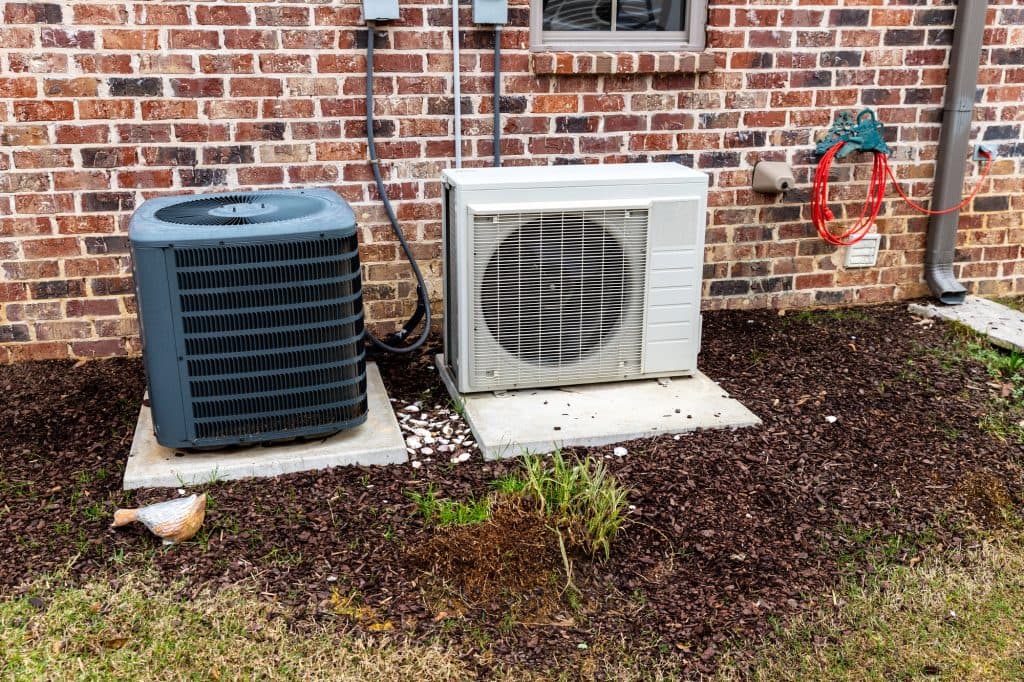
If you own an older home in Bradenton, there is a decent chance an insurance company has asked you for a 4-point inspection — or will. It is a limited report covering four systems: roof, electrical, HVAC, and plumbing. Carriers use it to decide whether to write or renew a policy, and unlike a buyer’s home inspection, its purpose is not to give you a to-do list. Its purpose is to give an underwriter a yes or a no.
Two of those four systems are ours. Here is what inspectors look at on the HVAC and plumbing side, what tends to get flagged, and what you can do before the inspector shows up.
When You Will Be Asked for One
Requirements vary by carrier, but a 4-point inspection is generally triggered by the age of the home — commonly around the 20-to-30-year mark — and is requested when you apply for a new policy, switch carriers, or in some cases at renewal. Given how much of Manatee County’s housing stock was built in the 1970s through the 1990s, that covers an enormous number of local homes.
The important thing to understand is the stakes. A failed 4-point can mean a declined application, a non-renewal, or a requirement to make specific repairs before coverage is issued. It is worth taking seriously before the inspection rather than after.
Plumbing Red Flags
Polybutylene supply piping
This is the biggest one. Polybutylene is a gray, flexible plastic pipe used widely in homes built from roughly the late 1970s into the mid-1990s — squarely the era of a large share of Bradenton housing. It became notorious for failing without warning, and the resulting water-damage claims were severe enough that most Florida carriers today will simply not write a policy on a home that still has it.
If polybutylene shows up on your report, there is no partial fix and no way to argue it away. The resolution is repiping the home in modern materials. That is real work, but it is also permanent, it resolves the insurance problem completely, and it eliminates a genuine risk of a failure that floods your house.
Water heater age and condition
Inspectors record the water heater’s age from the data plate and look for corrosion, active leaks, moisture staining at the base, and whether the temperature and pressure relief valve is properly configured with a discharge pipe. A tank past roughly 12 to 15 years draws attention on its own, and a tank showing rust or seepage is a straightforward flag.
If your water heater is old enough to be a question mark, replacing it before the inspection is usually the cheaper path. It removes an item from the report, and you were going to replace it soon anyway.
Active leaks and prior water damage
Any visible leak — under a sink, at a supply valve, around the water heater — is a finding. So is evidence of past water damage that was never properly repaired, because to an underwriter that reads as an unresolved problem. Cabinet staining, buckled flooring at a fixture, and patched drywall under a bathroom all invite questions.
Galvanized and other legacy materials
Older galvanized steel supply lines corrode from the inside, restricting flow and eventually failing. Cast iron drain lines, common in mid-century Florida construction, deteriorate and crack over time. Neither is automatically disqualifying the way polybutylene is, but both draw scrutiny, and if you are already having flow or drainage problems, that is your system telling you what the inspector is about to write down. A video pipe inspection is the way to know what is actually in the ground before you guess.
HVAC Red Flags
System age
The inspector records the age of the air handler and condenser from the data plates. Equipment past roughly 15 to 20 years is commonly flagged as at or beyond expected service life. This is the item homeowners are most often surprised by, because a 19-year-old system that still cools the house does not feel like a problem — but on paper it reads as a system due to fail.
The system has to actually work
In Florida, functioning cooling is effectively expected. A system that is not operating at the time of inspection, or that is obviously struggling, is a finding. If your air conditioning has been limping through the season, get it addressed before the inspector arrives rather than hoping it holds up for the visit. Our AC repair team can sort out what is wrong.
Visible condition and installation issues
Inspectors photograph what they see. Rust at the air handler base, a condensate pan holding standing water, staining on the ceiling or platform beneath the unit, disconnected or crushed ductwork, missing or improvised disconnects, and obvious signs of an unpermitted or amateur installation all end up in the report. A condensate drain that has clearly been overflowing is both an insurance flag and a real problem worth fixing on its own merits.
Documented maintenance helps
Age is a number an inspector cannot change, but a system with a clean service history, in good condition, and running properly presents very differently from one that has never been touched. This is one of the underrated benefits of being on a maintenance plan: your equipment stays in documented, demonstrable good condition.
What to Do Before the Inspector Comes
- Find out what you have. Check your supply piping where it is visible — under sinks, at the water heater, in the attic. Gray flexible plastic with stamped markings is worth identifying definitively.
- Note the ages. Read the data plates on your water heater, air handler, and condenser. Know these numbers before an underwriter does.
- Fix active leaks now. Every drip is a finding, and most are small repairs.
- Clear and service the condensate drain. Standing water or overflow staining is easy to prevent and looks bad on a report.
- Make sure the AC runs properly. Have it serviced ahead of the visit.
- Get ahead of the big items. If you have polybutylene or a water heater near the end of its life, plan the work rather than waiting for a declination letter with a deadline attached.
Get an Honest Read Before the Report Does It for You
The homeowners who get blindsided by a 4-point inspection are almost always the ones who had never looked. The ones who come through it fine are the ones who knew what they had and dealt with the obvious items in advance.
McDonald Home Services handles both sides of this — plumbing and air conditioning — for homeowners throughout Bradenton and the surrounding area. If you have an inspection coming up, or you just want to know where you stand, schedule an evaluation and we will tell you plainly what an inspector is going to find.
Frequently Asked Questions
Can I fail a 4-point inspection?
There is no formal pass or fail. The inspector documents conditions and the insurance carrier decides what to do with that information. In practice, certain findings — polybutylene piping being the clearest example — lead most Florida carriers to decline coverage or require the issue be corrected first.
How do I know if my house has polybutylene pipes?
Look where supply lines are visible: under sinks, behind the water heater, at the main shutoff, in the attic. Polybutylene is typically gray, flexible, and stamped with markings along its length, and is often joined with plastic or copper crimp fittings. If you are unsure, a plumber can identify it in a few minutes. Homes built between the late 1970s and mid-1990s are the ones to check.
Will an old air conditioner alone get my policy denied?
Usually not by itself. Age is noted, and a system beyond its expected service life may prompt questions or affect terms, but a well-maintained system in good working condition presents much better than a neglected one of the same age. Carrier requirements vary, so the specifics depend on your insurer.
How long is a 4-point inspection good for?
Most carriers accept a report for a limited window, commonly a year or less, and standards differ between companies. If you are shopping policies, check what your prospective carrier will accept before paying for a new inspection.
Is repiping worth it just for insurance?
It is rarely just for insurance. Polybutylene has a documented history of failing without warning, and a supply-line failure inside a wall causes significant damage. Repiping resolves the coverage obstacle and removes a genuine risk to the house at the same time.

Bob Bermudez, MBA, is the President and Owner of McDonald Home Services (Jim McDonald & Sons Heating & Cooling), a family-run HVAC and plumbing company serving Bradenton, Sarasota, and Manatee County since 1970. Before buying the company, Bob spent his career on the manufacturing and distribution side of HVAC — a background that shapes how he advises homeowners on equipment.