
The most expensive mistake a seasonal Bradenton homeowner can make is treating a summer departure like a long vacation. A house left closed through a Southwest Florida summer faces months of extreme humidity with nobody there to notice a musty smell or a wet baseboard. The two systems that decide how you find the house in the fall are your air conditioning and your plumbing, and both need a deliberate setup before you lock the door.
Here is the checklist, in the order it should be done.
First: Do Not Turn the Air Conditioning Off
This is the single most important item on the list. It is tempting to shut the system down entirely to save on power for four or five months. Do not do it.
Your air conditioner is the only thing removing moisture from the house. Without it, a closed Bradenton home in July becomes a warm, saturated box, and warm saturated air condenses on cool interior surfaces. That is how homeowners come back to mold on closet walls, warped cabinet doors, cupped wood flooring, and a smell that takes professional remediation to remove. The electricity you save is a fraction of what that repair costs.
Setting the thermostat for an empty house
You are no longer cooling for comfort. You are running the system enough to control moisture. A setting in the low-to-mid 80s is a common approach for an unoccupied Florida home, which lets the system cycle periodically through the day rather than sitting idle for weeks.
If your home has a humidistat or a thermostat with a humidity control setting, use it. That is the better tool for this job, because it triggers the system based on the moisture in the house rather than the temperature. Many seasonal homeowners set humidity control in the upper 50s and pair it with a modest temperature setting, so the system runs when the house gets damp instead of only when it gets warm.
If you are not sure what your thermostat is capable of, that is worth a conversation before you leave. Modern Wi-Fi and smart thermostats also let you check conditions in the house from a thousand miles away, and alert you if the temperature or humidity drifts out of range. For a seasonal home, that remote visibility is genuinely useful.
Service the system before you go, not after you return
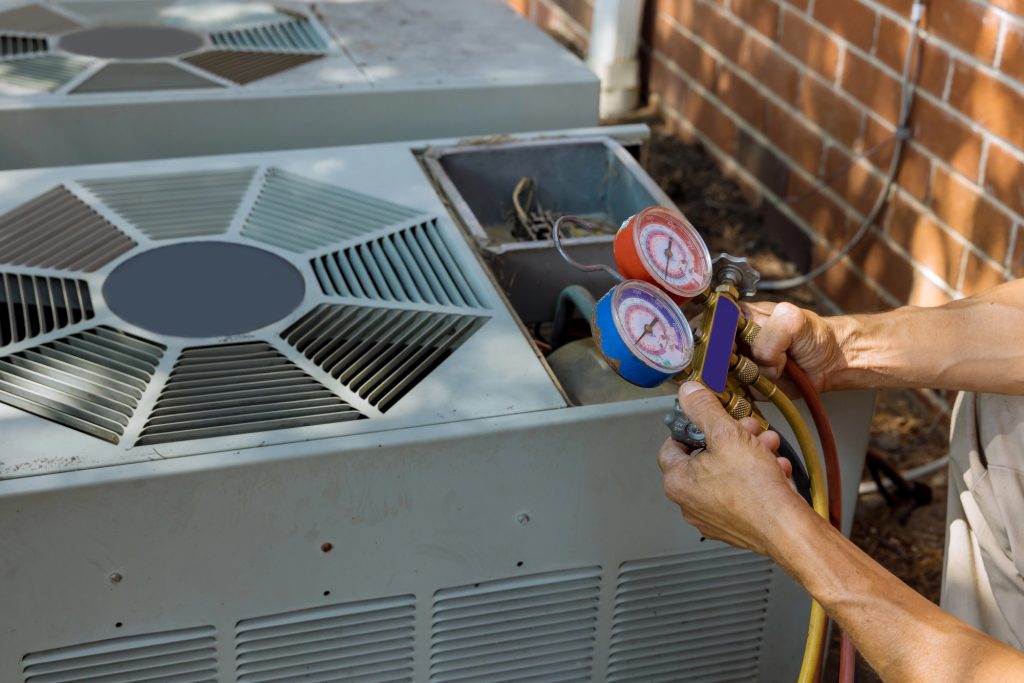
You are about to ask your air conditioner to run unsupervised for months. A pre-departure tune-up is the difference between a system that gets through the summer and one that fails in week three with nobody there to hear it. A technician will check refrigerant charge, clean the coil, and most importantly clear and treat the condensate drain line.
That drain line deserves special attention. It is the most common failure in an unoccupied Florida home: the line clogs, the pan overflows, and water runs for weeks into a ceiling or across a floor. Ask about a float switch that shuts the system down if the pan fills, and consider whether a whole-home dehumidifier makes sense as a backstop for a house that sits empty every year.
Second: Shut the Water Off at the Main
An air conditioning problem in an empty house is expensive. A plumbing leak in an empty house is catastrophic, because it has months to run.
Close the main water shutoff valve. If you have never located it, find it now while you have time — not on the morning you are trying to catch a flight. Then work through the fixtures:
- Close the supply valves at every sink and toilet.
- Close the supply valves to the washing machine and dishwasher, and inspect the washer hoses for bulges or corrosion while you are back there.
- Open a low faucet briefly to relieve pressure in the lines.
- Confirm the ice maker line is shut off. An ice maker running on a closed water supply, or leaking on an open one, is a classic seasonal-home discovery.
Leave irrigation on its own supply if it runs off a separate line, since your landscaping still needs water. Just make sure the house side is isolated.
If a valve does not want to close
Shutoff valves that have not been touched in years often seize, and forcing one is how you turn a departure checklist into an emergency call. If a valve will not turn cleanly or weeps after closing, have it replaced. Our main water line team handles valve replacements routinely, and it is far cheaper as scheduled work than as a crisis.
Third: Deal With the Water Heater
There is no reason to keep water hot for four months in an empty house. For an electric water heater, switch off the dedicated circuit breaker. For a gas unit, set it to its vacation or pilot setting.
If your tank is more than about ten years old, look at it honestly before you leave. Rust at the base, moisture around the fittings, or a history of temperature problems are all reasons to address it now rather than gamble on a tank failure while you are away. A tank that lets go in an occupied home is a bad day; in an empty one it can flood a slab for weeks. Our water heater team can tell you whether yours has another season in it.
Fourth: Protect the Drains and Traps
Every drain in your house has a P-trap holding a small amount of water, and that water is what blocks sewer gas from entering the house. Over several months of Florida heat, traps in unused fixtures evaporate dry. That is why a closed-up house sometimes greets you with a sewer smell in the fall.
Before you leave, run every fixture briefly so the traps are full, then pour a small amount of mineral oil into the drains of fixtures you know will go unused — guest bath, laundry sink, seldom-used shower. The oil floats on top of the water and slows evaporation substantially.
Also flush every toilet, and put the lid down. And if any drain in the house has been slow this season, deal with it before you go. A partial clog does not improve while you are away. Our drain cleaning service is a straightforward pre-departure item.
Fifth: Arrange for Someone to Look In
No amount of preparation replaces a human being walking through the house periodically. Whether it is a neighbor, a family member, or a property management service, someone should check in monthly and know two things: where the main water shutoff is, and who to call.
Give that person our number and let them know they are authorized to have someone come out. The difference between a small repair and a major loss is usually just how many days went by before anyone noticed.
A Quick Word on Coming Back
When you return in the fall, reverse the list carefully rather than all at once. Open the main valve slowly and let the system pressurize gradually. Walk the house and look under every sink and around the water heater before you settle in. Run the water until it clears. Turn the water heater back on and give it time. And before you set the thermostat back to comfort, have the air conditioning system checked — it has just finished a long unsupervised run.
Let Us Handle the Pre-Departure Visit
Most of this list is homeowner work, but the parts that matter most — the air conditioning tune-up, the condensate drain, a questionable shutoff valve, an aging water heater — are worth a professional visit before you go. McDonald Home Services has been taking care of seasonal homes in Bradenton and across Manatee and Sarasota counties for decades, and we can cover HVAC and plumbing in one appointment.
Schedule your pre-departure service a few weeks before you leave, so there is time to fix anything we find.
Frequently Asked Questions
What temperature should I leave my Bradenton house at for the summer?
Most seasonal homeowners set an unoccupied Florida home somewhere in the low-to-mid 80s, which allows the air conditioner to cycle and pull moisture out of the air without cooling an empty house to comfort levels. If your thermostat or humidistat can control based on humidity rather than temperature, use that instead — it is a better match for the actual goal.
Can I just turn the AC off and use a dehumidifier instead?
Portable dehumidifiers can help, but they are a poor sole defense for a whole house. They have limited capacity, they need somewhere to drain, and if one fails you have no moisture control at all. A whole-home dehumidifier working alongside the air conditioning is a much stronger setup for a home that sits empty every year.
Should I really shut off the water if nobody will be there?
Especially if nobody will be there. An unnoticed supply-line leak, a failed water heater, or a running toilet can release an enormous volume of water over several months. Shutting the main is the single highest-value item on the plumbing side of this list.
Why does my house smell like sewer when I return each year?
Almost always dry P-traps. The water sealing each drain evaporates over months of heat, and sewer gas comes up through the empty trap. Running every fixture to refill the traps usually clears it within a day, and adding mineral oil to unused drains before you leave prevents it next time.
How far in advance should I schedule the pre-departure service?
Two to four weeks before you leave is ideal. That gives you room to handle anything we find — a failing shutoff valve, a water heater near the end of its life, a drain that needs clearing — without rushing it into your last few days.

Bob Bermudez, MBA, is the President and Owner of McDonald Home Services (Jim McDonald & Sons Heating & Cooling), a family-run HVAC and plumbing company serving Bradenton, Sarasota, and Manatee County since 1970. Before buying the company, Bob spent his career on the manufacturing and distribution side of HVAC — a background that shapes how he advises homeowners on equipment.