
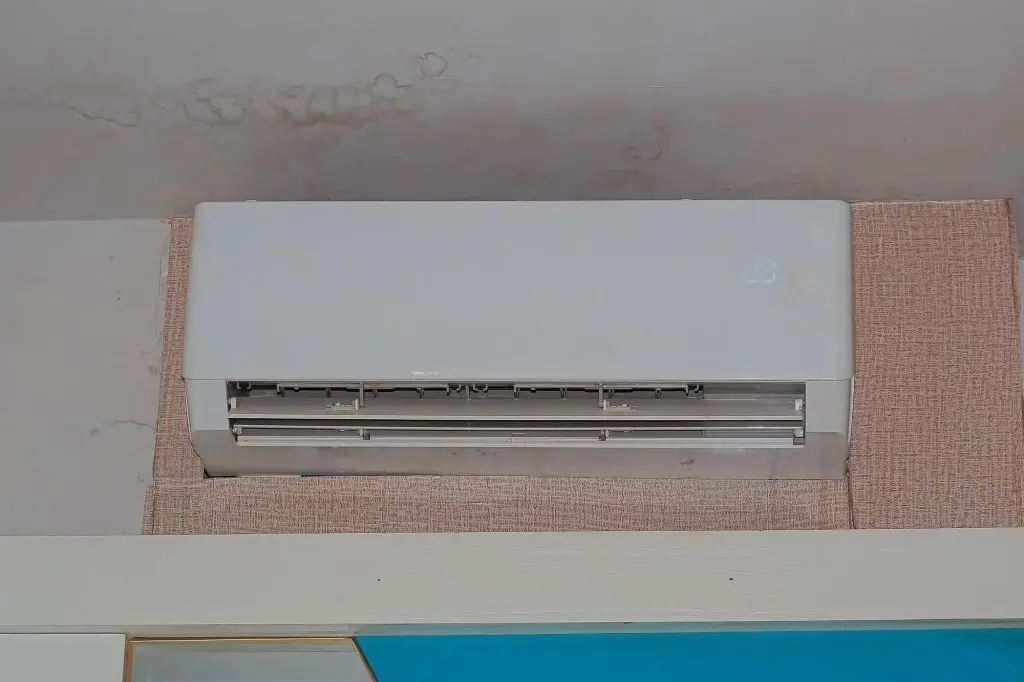
The thermostat reads 74. The air conditioner is clearly running. And the house still feels clammy — sheets that never quite dry out, doors that stick, a bathroom mirror that fogs for no good reason. If that sounds like your Bradenton home, the problem is not that your air conditioner is broken. It is that cooling and dehumidifying are two different jobs, and your system is only doing one of them well.
Here is what is actually going on, and how to tell which cause is yours.
Why Your Thermostat Cannot Tell You the Whole Story
A standard thermostat measures one thing: temperature. It has no idea how much moisture is in your air. So it will happily report that the house has hit its setpoint while the indoor relative humidity sits somewhere that makes 74 degrees feel like 78.
Comfort in Southwest Florida is mostly a humidity story. Indoor relative humidity in the range of roughly 45 to 55 percent generally feels good. Push into the 60s and the same temperature feels heavy and sticky, and you start seeing the secondary problems — musty odors, condensation on windows and vents, mold in closets and behind furniture.
The first thing to do is stop guessing. An inexpensive hygrometer tells you your actual indoor humidity, and everything below becomes much easier to diagnose once you have that number.
How an Air Conditioner Removes Moisture
Understanding the mechanism makes the causes obvious. Your indoor coil gets cold. Warm, humid air from your house passes across it. Water vapor condenses on the cold coil, collects in the drain pan, and leaves the house through the condensate drain line. The cooled, drier air goes back into the rooms.
Three things have to be true for that to work: the coil has to get cold enough, air has to move across it at the right rate, and the system has to run long enough for meaningful condensation to happen.
That last one is where most humid houses fail. Dehumidification is a function of runtime. A system that satisfies the thermostat in short bursts never gets to the part of the cycle where it is pulling serious moisture out of the air.
The Most Common Causes
1. The system is oversized for the house
This is the leading cause, and it is counterintuitive — a bigger air conditioner makes a house less comfortable here, not more.
An oversized system drives the temperature down fast and shuts off. Cycles are short, the coil never stays cold long enough to wring much water out of the air, and the house ends up cool and damp. Homeowners then lower the thermostat, which makes the cycles shorter still, and the house gets clammier and the power bill climbs.
Oversizing usually traces back to an installation where nobody performed a real load calculation and someone sized the equipment by square footage or by matching whatever was there before. If your system blasts cold for a few minutes and then goes quiet, over and over, this is likely your issue. It is also the hardest one to fix cheaply — the real solution is correctly sized equipment, which is why our installation team runs a load calculation on every replacement rather than assuming.
2. The fan is set to ON instead of AUTO
Check this today, because it is free to fix.
With the fan set to ON, the blower runs continuously — including after the cooling cycle ends. That means air keeps moving across a coil that is still wet, and much of the moisture the system just captured evaporates right back into your house before it can drain away. Set the fan to AUTO so the blower runs only during cooling cycles and the condensate actually drains.
3. Restricted airflow
A clogged filter, a dirty evaporator coil, closed or blocked registers, or an undersized return all strangle airflow. That can cause the coil to run too cold and even ice over, which cuts capacity, shortens effective runtime, and hurts dehumidification. It also drives up your energy use and stresses the compressor.
Change your filter on schedule — in Bradenton’s long cooling season, more often than the package suggests. Coil cleaning is a maintenance-visit item, and a coil that has not been touched in years is often the whole story.
4. Leaky ductwork pulling in humid air
If your ducts run through an attic, they sit in one of the hottest, most humid spaces in Florida. Gaps at joints and connections on the return side pull that attic air directly into your system, so you are paying to dehumidify the attic. Supply-side leaks dump conditioned air into the attic instead of your rooms, which extends runtime without improving comfort.
Signs include rooms that never cool evenly, dust that returns immediately after cleaning, and bills that do not match how the house feels. Duct sealing or replacement often produces a bigger comfort improvement than anything else on this list.
5. Low refrigerant charge
An undercharged system caused by a leak loses capacity. It runs and runs without ever getting the coil properly cold, so it both cools poorly and dehumidifies poorly. If the house is humid and struggling to hit temperature at all, and especially if you have noticed ice on the lines, this needs a technician. Topping off the charge without finding the leak is not a repair — it is a delay.
6. A blocked condensate drain
Everything can be working correctly and the moisture still has nowhere to go. When the drain line clogs — common here, given how much water these systems pull and how readily algae grows in the line — water backs up in the pan, re-evaporates into the airstream, and in the worst case overflows into your ceiling or platform. Standing water in the pan is a clear tell.
7. Moisture the system was never asked to handle
Sometimes the air conditioner is fine and the house is simply generating or admitting more moisture than expected: bath fans that vent into the attic rather than outside, a dryer with a disconnected vent, long showers with no exhaust running, an unsealed crawl space or slab issue, or a plumbing leak nobody has found. If humidity is concentrated in one part of the house, look for a local source before blaming the whole system.
When You Need More Than the Air Conditioner
Here is the honest part: in our climate, there are homes where even a correctly sized, well-maintained system cannot hold humidity where you want it. Very efficient, tightly built homes, houses with low cooling loads, and homes where you want humidity control during mild weather when the AC barely runs at all are all cases where the cooling system simply is not asked to run enough to do the dehumidification job.
That is what a whole-home dehumidifier is for. It works independently of the cooling cycle, controls humidity on its own terms, and lets you sit comfortably at a higher thermostat setting — which often reduces energy use rather than increasing it. Variable-speed and inverter-driven systems help for the same underlying reason: they run longer at lower capacity, and long gentle runtime is exactly what dehumidification wants.
What to Do First
- Put a hygrometer in the main living area and get a real number.
- Set the thermostat fan to AUTO.
- Change the air filter.
- Confirm supply and return registers are open and unobstructed.
- Look at the condensate pan for standing water.
- Check that bath and dryer vents actually terminate outside.
If the house is still damp after all of that, the cause is inside the system — airflow, charge, ductwork, or sizing — and it needs measurement, not more guessing.
Let Us Find the Real Cause
A technician can measure the temperature split across your coil, check static pressure and airflow, verify refrigerant charge, evaluate your ductwork, and tell you whether your equipment is correctly sized for your home. That turns “the house feels sticky” into a specific, fixable finding.
McDonald Home Services has been solving humidity problems in Bradenton homes for a long time, and we would rather fix the cause than sell you equipment you do not need. Schedule service and let us find out what your house is actually doing.
Frequently Asked Questions
What indoor humidity should I aim for in a Florida home?
Roughly 45 to 55 percent relative humidity is a comfortable and practical target. Consistently above about 60 percent is where the house starts feeling sticky and where mold and dust mites become a genuine concern.
Will lowering the thermostat dry out my house?
Usually the opposite, if oversizing is your problem. A lower setpoint makes an oversized system cycle even more abruptly, giving it less runtime to remove moisture. You end up colder, no less humid, and paying more. Fixing airflow, sealing ducts, or adding dedicated dehumidification works far better than chasing it with the thermostat.
Why does my house feel most humid in spring and fall?
Because outdoor air is still very humid but temperatures are mild, so your air conditioner barely runs. Little runtime means little dehumidification. This is the classic case where a whole-home dehumidifier earns its keep, since it controls moisture without needing the cooling cycle.
Is a portable dehumidifier enough?
It can help in a single problem room — a damp closet, a converted garage — but portable units have limited capacity, need emptying or a drain, and add heat to the space. For a whole house, a system that ties into your ductwork and drains automatically is the right tool.
Can high humidity actually damage my house?
Yes. Sustained high indoor humidity supports mold growth in closets, behind furniture, and inside ductwork; it can cup or warp wood flooring and swell cabinetry and doors; and it makes life easier for dust mites, which matters for anyone in the house with allergies or asthma. Comfort is the reason people call, but the damage is the reason not to wait.

Bob Bermudez, MBA, is the President and Owner of McDonald Home Services (Jim McDonald & Sons Heating & Cooling), a family-run HVAC and plumbing company serving Bradenton, Sarasota, and Manatee County since 1970. Before buying the company, Bob spent his career on the manufacturing and distribution side of HVAC — a background that shapes how he advises homeowners on equipment.