


Mold growth is dangerous for your home and your family. Sometimes mold growth is easy to identify because you can see it. But other times, mold can grow in dark, hidden spaces, like the inside of your air conditioner.
When this happens, mold is more difficult to identify. You can keep reading to learn more about some of the signs that can indicate mold growth, even if you don’t see an infestation in obvious places. Then, give our team a call to schedule an air conditioning service in Bradenton to stay ahead of a mold problem before it spreads further around your home.
Musty Odors

If the air coming out of your air conditioner has a musty or damp smell it’s a red flag that could point toward a mold infestation. If your air conditioner does not remove humidity the way it is supposed to, moisture could gather inside of the unit, creating the perfect environment for mold to thrive. There are always mold spores in the air around you, but they can cling to dark, damp surfaces and spread to become an infestation quickly.
Visible Mold on Other Surfaces
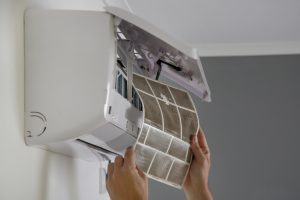
Noticing mold anywhere else around your home can mean that it is also in your HVAC system. This is especially true if you notice mold in multiple places around your home. Since your HVAC system distributes air into all of the rooms, there’s a good chance that the mold infestation originated inside of the system or ductwork.
The thing about mold is that it has to be completely eliminated from your home or you will continue to struggle with the problem. This means having a professional wipe down and sanitize any surfaces that have mold growing on them and getting rid of anything that was affected by mold.
Increased Allergy Symptoms

Mold can increase allergy symptoms that you experience. For example, maybe you get seasonal allergies or have known allergies to something like cats or pollen. Mold is a common allergy trigger, though people react very differently to it — some notice nothing, while anyone with asthma or a diagnosed mold allergy can react strongly.
A cough or throat irritation that lingers at home and eases when you are away for a few days is worth paying attention to, because that pattern points at the building rather than the season. If symptoms persist, speak to your doctor about the symptoms themselves — and have your HVAC system inspected for the moisture problem that may be feeding the growth.
Skin and Eye Irritation

Skin and eye irritation are also reported, particularly by people already sensitive to mold. Claims tying household mold to headaches and a long list of other complaints are far less well established than the allergy and asthma links, and we would rather say so than overstate it. If you are not finding relief, talk to your doctor — and separately, have the system checked for the damp conditions that let mold take hold.
What Mold in an Air Conditioner Actually Looks Like
This is the question we get asked most, usually with a photo attached. Here is what homeowners in Bradenton and Sarasota are typically looking at:
- Black or dark-green speckling on the vent louvers. The metal slats of a supply register run cold, humid room air condenses on them, and growth takes hold on the damp surface. It looks like someone flicked dark paint across the vent.
- Dark staining on the lining inside the air handler. Many air handlers are lined with fibreglass insulation. When it stays damp it discolours in irregular blotches rather than neat spots.
- Fuzzy white or pale grey growth. Raised and textured rather than flat. Often found on the blower housing or around the evaporator coil.
- A pink, orange or slimy film in the drain pan. Worth knowing: this is usually bacteria and biofilm rather than mold. It still points at a drainage problem that needs fixing.
And the honest caveat: a great deal of what gets photographed and sent to us is dust, lint or ordinary dirt, not mold. Dust sits in even grey layers and wipes away cleanly. Mold tends to be irregular, patchy, sometimes raised, and it comes back in the same spot after you clean it. If it returns, the moisture that fed it is still there — and that is the actual problem to solve.
Symptom Table: What You’re Noticing and What It Usually Means
| What you notice | What it usually points to | How urgent | What to do next |
|---|---|---|---|
| A musty or damp smell when the AC kicks on, fading as it runs | Moisture sitting in the drain pan, on the evaporator coil, or in the first few feet of duct | Book it this week | Have the coil, pan and drain line inspected. Masking it with an air freshener leaves the moisture in place. |
| Water pooling around the indoor unit, or a full drain pan | A clogged condensate drain — far and away the most common cause of AC mold in Florida | Prompt | Clear the drain line. This is routine maintenance, not a major repair, and fixing it early prevents most of the rest of this table. |
| Dark speckling on the vent louvers in one or two rooms | Room air condensing on cold register metal — often a humidity or airflow issue rather than a duct-wide problem | Monitor | Clean the register and watch it. If it returns within weeks, the cause is upstream and worth investigating. |
| Growth visible inside the air handler cabinet | Active growth on insulation, the blower housing or the coil | Prompt | HVAC inspection. Damp fibreglass lining usually has to be replaced rather than cleaned. |
| Staining on drywall or ceiling near a vent | Condensation dripping from an uninsulated duct, or a duct leaking cold air into a warm space | Prompt | Two jobs: an HVAC visit to fix the cause, and a licensed mold assessor for anything that has spread into the building itself. |
| The house feels clammy even though the thermostat is satisfied | The system is cooling faster than it is dehumidifying — often an oversized unit short-cycling | Worth checking | An indoor air quality assessment. Persistent indoor humidity above roughly 60% is what lets mold establish in the first place. |
| Allergy-type symptoms that ease when you leave the house | Possibly something in the indoor air — though mold is only one of several candidates | Two conversations | Speak to your doctor about the symptoms, and to an HVAC or IAQ professional about the source. We are not qualified to do the first part. |
Frequently Asked Questions
What does mold in an AC unit look like?
Most often, black or dark-green speckling on the vent louvers, irregular dark staining on the insulation lining inside the air handler, or fuzzy white-to-grey patches near the blower or evaporator coil. The clearest test is not colour but behaviour: dust wipes away and stays away, while mold returns to the same spot because the moisture feeding it is still there.
What does mold in an air conditioner smell like?
Musty, earthy, a little like a damp basement or wet cardboard. The giveaway is the timing — the smell is strongest in the first minute or two after the system starts, then fades as air moves through. A smell that arrives with the airflow is coming from inside the system, not from the room.
What are the symptoms of mold in your air conditioner?
On the equipment side: a musty smell when it runs, visible growth on registers or inside the cabinet, water around the indoor unit, and a house that feels humid despite the thermostat being satisfied. On the health side, reactions are typically allergy-like — sneezing, a blocked or runny nose, itchy eyes, throat irritation — and they often ease when you are away from home for a day or two. That last pattern is the useful clue, because it points at the building rather than the season.
Can mold in your AC make you sick?
It can affect some people, and the honest answer is that it depends a great deal on who you are. The well-established effects are allergic and respiratory: nasal congestion, sneezing, eye and throat irritation, and worsened symptoms for people with asthma or a diagnosed mold allergy. People with weakened immune systems or chronic lung conditions face higher risk. Plenty of people exposed to the same air notice nothing at all.
You will find claims online tying household mold to headaches, memory problems and a long list of other complaints. Those links are far less well established than the allergy and asthma ones, and we are not going to pretend otherwise in order to sell a cleaning. If you have symptoms that concern you, that is a conversation for your doctor. What we can tell you is whether your system has a moisture problem.
Is mold on your air vents dangerous?
Growth on the register itself is usually the least serious version of the problem, because the registers are the easiest part to clean and the growth is often driven by simple condensation on cold metal. What matters more is why it is there. If it keeps coming back after cleaning, or appears at several vents at once, the moisture source is further inside the system and cleaning the vent covers only treats the symptom.
Why does mold keep coming back in Florida air conditioners?
Because the conditions here are close to ideal for it almost year-round. Our systems run long hours against high outdoor humidity, which means condensate is being produced constantly and has to drain away reliably. Add a partially clogged drain line, a system slightly oversized for the house so it cools quickly without running long enough to dehumidify, and ductwork passing through a hot attic, and you have damp surfaces sitting in the dark for months. Cleaning removes what is there; only fixing the drainage, the humidity or the airflow stops it returning.
Can I clean AC mold myself?
Wiping down a vent cover or register with household cleaner is reasonable, and plenty of homeowners do it. Beyond that we would not recommend it. The evaporator coil and blower are easy to damage and awkward to reach, damp fibreglass insulation cannot really be cleaned and generally needs replacing, and the single most useful job — clearing the condensate drain properly — is not obvious from the outside. There is also a practical point: scrubbing growth releases spores into the air you are standing in.
Does duct cleaning get rid of mold?
Sometimes, and sometimes it is the wrong purchase. If there is genuine growth in the ductwork, professional cleaning helps. But if the real cause is a blocked condensate drain or a humidity problem, a duct cleaning gives you a few clean months and then the same phone call. We would rather find the moisture source first and tell you honestly whether the cleaning is worth doing.
Where Our Work Ends and a Mold Specialist’s Begins
Worth being straight about this, because it affects who you should call. Florida licenses mold assessors and mold remediators separately from air conditioning contractors. We are an HVAC and plumbing company: we inspect, clean and repair the system itself — coils, drain lines, blowers, air handlers and ductwork — and we fix the moisture problems that let mold establish there.
If mold has moved beyond the system into drywall, framing or insulation, that is work for a licensed mold assessor and remediator, and we will tell you so rather than sell you a duct cleaning that was never going to solve it. Quite often both are needed: someone to remediate what has grown, and someone to fix the air conditioning problem that caused it. We are glad to handle our half and point you to the right people for the rest.
Do yourself a favor and contact Jim McDonald & Sons Heating & Cooling for air conditioning service in Siesta Key, FL. Cooling Sarasota and Manatee Counties since 1970!

Bob Bermudez, MBA, is the President and Owner of McDonald Home Services (Jim McDonald & Sons Heating & Cooling), a family-run HVAC and plumbing company serving Bradenton, Sarasota, and Manatee County since 1970. Before buying the company, Bob spent his career on the manufacturing and distribution side of HVAC — a background that shapes how he advises homeowners on equipment.